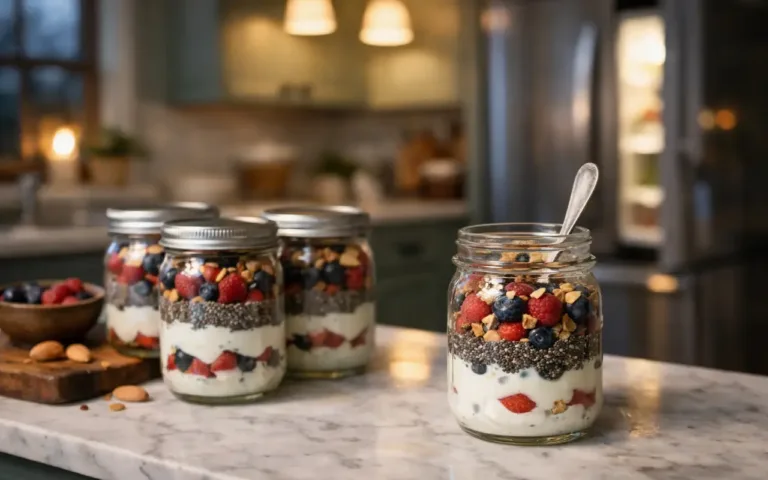
High protein snacks work best when they’re built, not improvised: a protein base for staying power, a fiber partner to slow the “hungry again” crash, and a portable format that doesn’t leak or turn soggy. The foundational skill here is assembly control—choosing ingredients that hold texture in the fridge, layering them in a stable order, and using simple endpoint cues (thickness, separation, and crunch management).
This system is most useful for busy workdays, post-school hunger, or any week where you want fewer decisions and consistent results. This guide includes a protein snack formula, a practical roadmap, one full featured snack recipe card, technique controls, troubleshooting, variations that don’t fall apart, and planning notes for storage and scaling. You’ll be able to prep once and repeat the same structure all week with different flavors.
Go straight to the Recipe Card for exact quantities and the complete step order.
Skill Map
- Build high protein snacks using a repeatable “base + fiber + crunch + flavor” structure
- Choose ingredients that stay stable for 3–5 days (no watery breakdown, no soggy layers)
- Use layering and packaging to protect texture (crunch stays crunchy; bases stay thick)
- Scale from 2 to 10 portions without changing the method
- Troubleshoot common failures quickly (thin jars, bland taste, separated layers)
Cook’s Roadmap
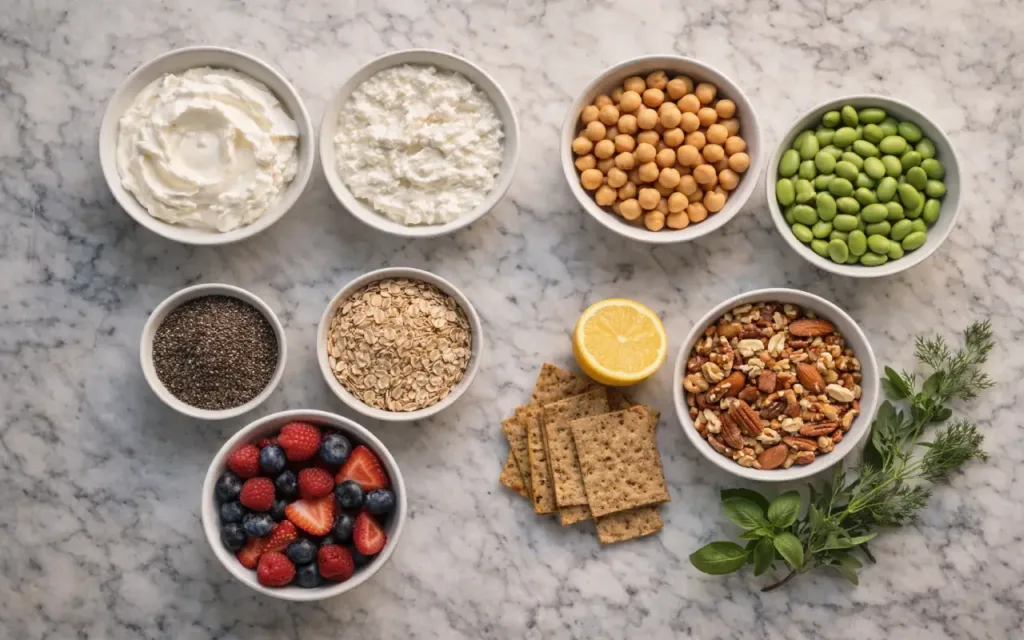
- Pick a protein base that holds: Greek yogurt, cottage cheese, edamame, or beans.
- Add a fiber partner: chia, oats, fruit, beans, or whole-grain crackers.
- Decide whether it’s no-cook jar, snack box, or dip + dippers (choose the most portable format for your week).
- Control moisture: keep watery ingredients (fresh fruit, salsa) separate or layered correctly.
- Add crunch in a protected way (separate container, top layer, or just-in-time add).
- Season for balance: salt (savory) or a small sweetener (sweet) plus an acid note if needed.
- Portion, chill, and label the “use by” window so you don’t guess later.
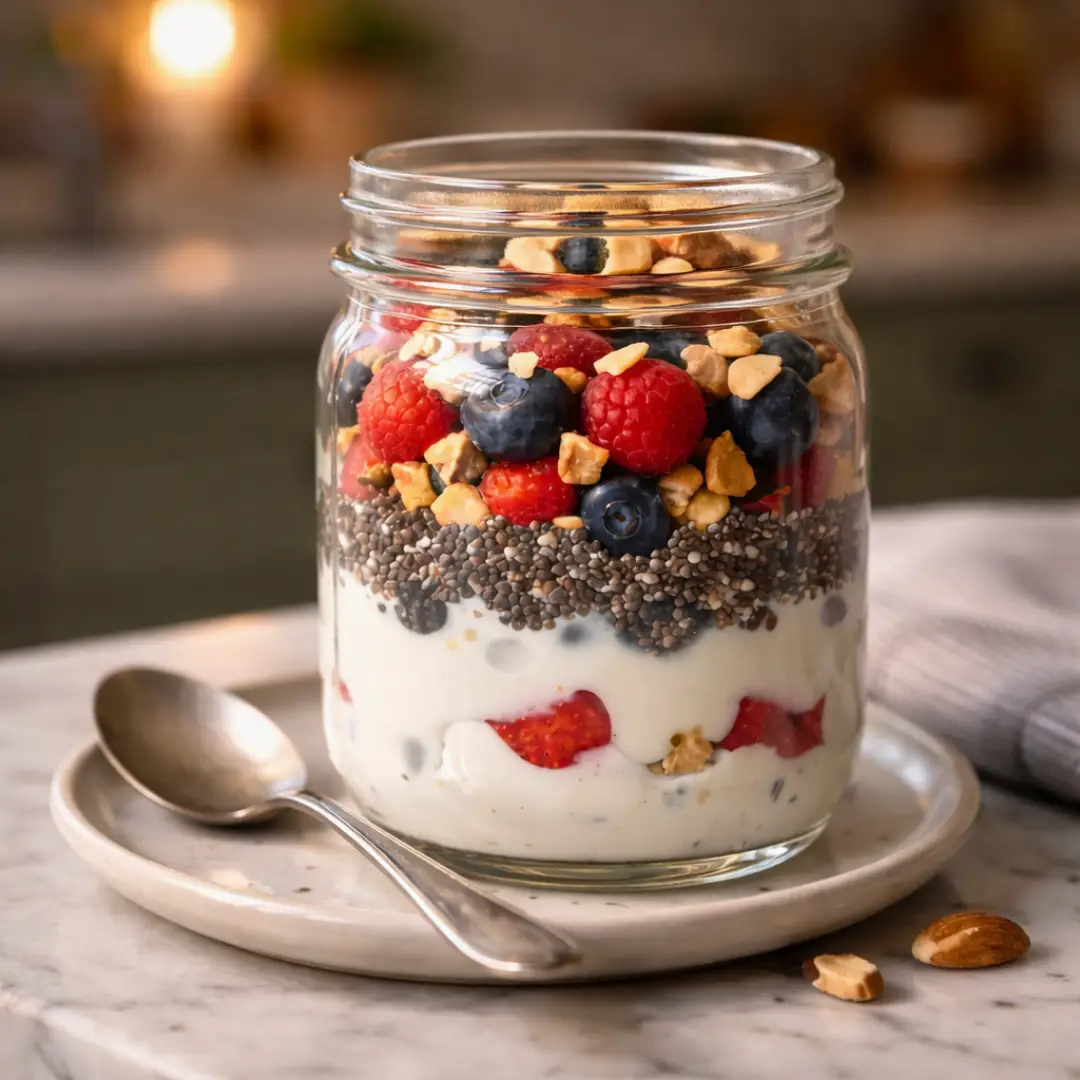
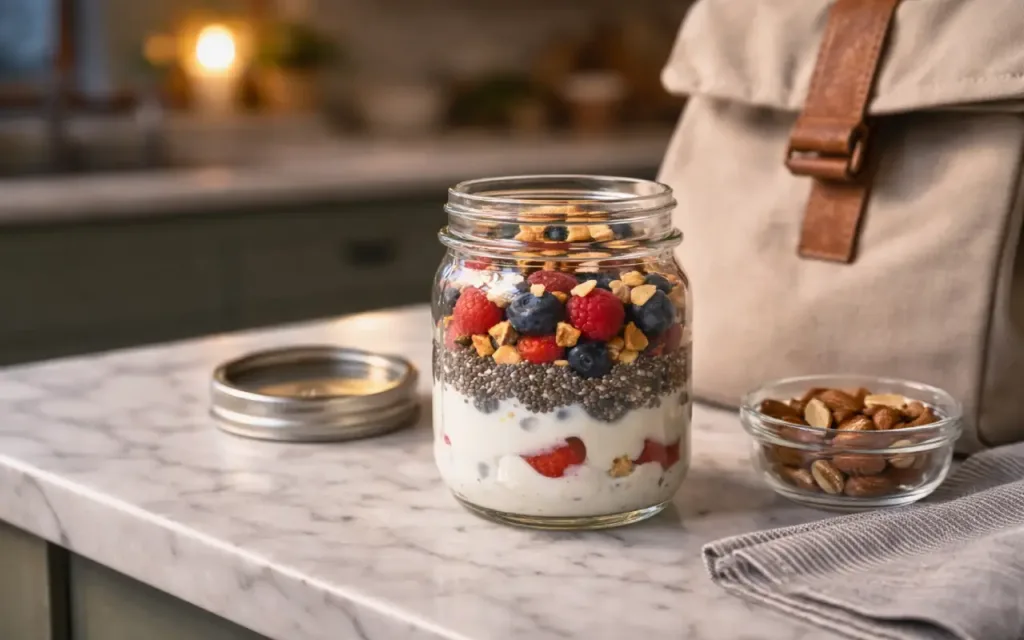
Prep-Once Greek Yogurt Protein Snack Jars (Berry-Almond)
Equipment
- 4 small jars or lidded containers (8–12 oz)
- Mixing bowl
- Spoon or small spatula
- Measuring cups/spoons
Ingredients
- 3 cups plain Greek yogurt 2% or whole for best texture
- 2 tbsp chia seeds
- 1 –2 tbsp honey or maple syrup optional
- 1 tsp vanilla extract optional
- 2 cups berries fresh or thawed-frozen, drained
- 1/2 cup chopped almonds or walnuts
- Optional fiber add-in: 1/3 cup rolled oats stir into yogurt base
- Pinch of salt tiny amount improves flavor in sweet snacks
Instructions
- Mix the base: In a bowl, stir Greek yogurt with chia, vanilla, optional sweetener, and a tiny pinch of salt.
- Set briefly: Let the mixture sit 5 minutes to thicken slightly.
- Layer: Spoon yogurt base into jars, add berries, then more yogurt if you want a layered look.
- Protect crunch: Add almonds to a separate tiny container, or keep them as the top layer if eating within 24 hours.
- Chill: Cover and refrigerate. Eat within 4 days for best texture.
Notes
- If using frozen berries, thaw and drain first to avoid watery jars.
- For a thicker jar, use whole-milk Greek yogurt and don’t skip the chia rest.
- For less sweetness, skip honey and add more vanilla plus a pinch more salt.
Ingredient Architecture
A) Structure / Body
What creates structure: thick yogurt + chia (or oats) forms a spoonable base that doesn’t run.
If structure is changed: thin yogurt or too much juicy fruit leads to watery jars and bland flavor.
Practical rule: if the base doesn’t hold a soft mound on a spoon before chilling, it will look thin tomorrow.
If you like a bite-sized option that uses the same “structure first” logic, use no-bake energy bites for a grab-and-go alternative.
B) Protein Engine
Primary protein: Greek yogurt provides the main protein load with minimal prep.
If protein is reduced: the snack becomes a “sweet bite” instead of a hunger-buffer, and you’ll snack again sooner.
Swap options: cottage cheese (thicker curds), skyr (very thick), or a blended tofu base for a dairy-free direction.
C) Fiber Partner
What adds fiber: berries + chia (and optional oats) slow digestion and improve staying power.
If fiber is missing: the snack can feel “light” and not satisfying even with protein.
Swap options: apples/pears (dice small), mashed banana (mix into base), or cooked/cooled oats.
D) Crunch + Texture Contrast
What adds crunch: nuts or seeds.
Failure mode: crunch turns soft if it sits in the yogurt too long.
Fix: store crunch separately or add it right before eating.
E) Flavor Balancer
Sweet snacks need balance: vanilla + pinch of salt; optional honey for mild sweetness.
If it tastes flat: add a squeeze of citrus to fruit, or slightly increase salt (small amounts).
Technique Controls
Control 1: Thickness cue (before you portion)
The base should look thick enough to hold on a spoon. If it looks loose, add a tablespoon of chia and wait 5 minutes, then reassess.
Control 2: Moisture management
Drain thawed frozen fruit. If using fresh fruit that releases juice (strawberries), keep it as a middle layer, not the bottom.
Control 3: Layer order for stability
Best order for texture: thick base first → fruit → thick base → crunch added later. Bottom fruit tends to leak and thin the whole jar.
Control 4: Portion sizing that actually works
Aim for a portion that feels like a “bridge” snack, not a dessert cup. If you keep getting hungry quickly, increase fiber (chia/oats) before increasing sweetness.
Control 5: Portable packaging
Leak-proof lids matter more than perfect layering. If you pack it daily, use straight-sided jars and keep nuts in a second container.
Control 6: Taste correction at the end
Adjust sweetness lightly after mixing. Over-sweetening is hard to fix; under-sweetening is easy to correct with a drizzle at eating time.
Troubleshooting Index
- Watery jar the next day: fruit released juice or yogurt was too thin → drain fruit and use thicker yogurt.
- Soggy nuts: crunch sat in yogurt too long → store nuts separately.
- Bland flavor: missing salt/vanilla balance → add a pinch of salt and vanilla, not more sugar.
- Too thick / gummy: too much chia → whisk in a splash of milk and let it sit 2 minutes.
- Not filling: missing fiber partner → add oats or more berries; keep the protein base the same.
Variations That Hold Up
- Chocolate-Peanut Butter Jar: mix cocoa + peanut butter into the base; use banana slices (thin) and keep nuts separate.
- Apple-Cinnamon Jar: diced apple + cinnamon; add oats for extra fiber and chew.
For a similar jar-style parfait approach, see EatingWell’s Nut & Berry Parfait. - Savory Cottage Cheese Box: cottage cheese + chopped cucumber + cherry tomatoes + everything seasoning; keep crackers separate.
- Hummus Crunch Box: hummus + carrots/celery + whole-grain crackers; add roasted chickpeas for extra texture.
- Edamame + Fruit Combo: shelled edamame + grapes; add nuts for fat + crunch (separate container).
Plan Ahead + Scale Smart (Storage, Scaling, Make-Ahead)
Storage
- Yogurt jars: best within 4 days (texture holds).
- Keep crunch separate if you want consistent texture all week.
Scaling
- Doubling: mix the base in a larger bowl and portion immediately so chia thickens evenly across jars.
- Halving: same method; just keep the thickness cue (spoon-hold) as your control.
Make-ahead
Pre-mix the yogurt base the night before, then portion quickly in the morning. If you want a second “prep once” option for the same week, add make-ahead egg muffins to your plan.
FAQ
How many times should I eat high protein snacks per day?
Use them to bridge long gaps between meals. If you’re snacking constantly, increase meal protein and fiber first.
Can I use low-fat yogurt?
Yes, but it’s more likely to look thin. Choose a thicker Greek-style yogurt and keep fruit well-drained.
What’s the easiest no-cook savory option?
A snack box with cottage cheese or hummus plus crunchy vegetables works well. Keep crackers separate until eating.
Mastery Checkpoint
If a snack fails after day one, it’s almost always a water + time problem, not a “recipe” problem. Set one rule and you’ll fix most issues: any ingredient that releases liquid (fruit, tomatoes, salsa) either gets drained, layered in the middle, or packed separately. That one staging habit keeps texture stable and makes high protein snacks repeatable instead of unpredictable.
Did you make this recipe? Leave a rating or a comment.