
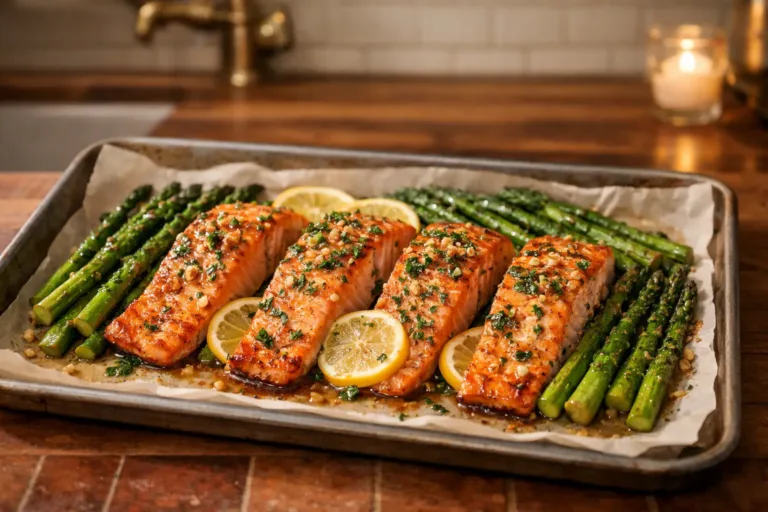
Quick dish brief
When you want Valentines Dinner Ideas that don’t require multiple pans or long prep, this sheet-pan salmon delivers. Total time is about 25 minutes, and the method is built around one priority: salmon that stays tender while asparagus still roasts (not steams). You’ll start the vegetables first, then add salmon partway through so both finish together. The garlic-butter base melts into quick pan juices you can spoon over everything—no separate sauce step, no wine, no fuss.
Valentines Dinner Ideas: leftovers + reheat plan
This dinner holds up well because the ingredients reheat cleanly without turning watery.
- Best leftover format: flake salmon into large chunks (not tiny bits) and keep asparagus whole.
- Reheat option 1 (best texture): 325°F oven, salmon and asparagus on a small tray, 7–10 minutes until warmed through.
- Reheat option 2 (fastest): microwave at 50% power in short bursts; add a teaspoon of water to the plate only if asparagus looks dry.
- Cold-use option: chilled salmon works well over a simple salad with lemon and olive oil.
If you want something sweet to finish without extra planning, pull a simple option from our Desserts collection.
Ingredients you actually need
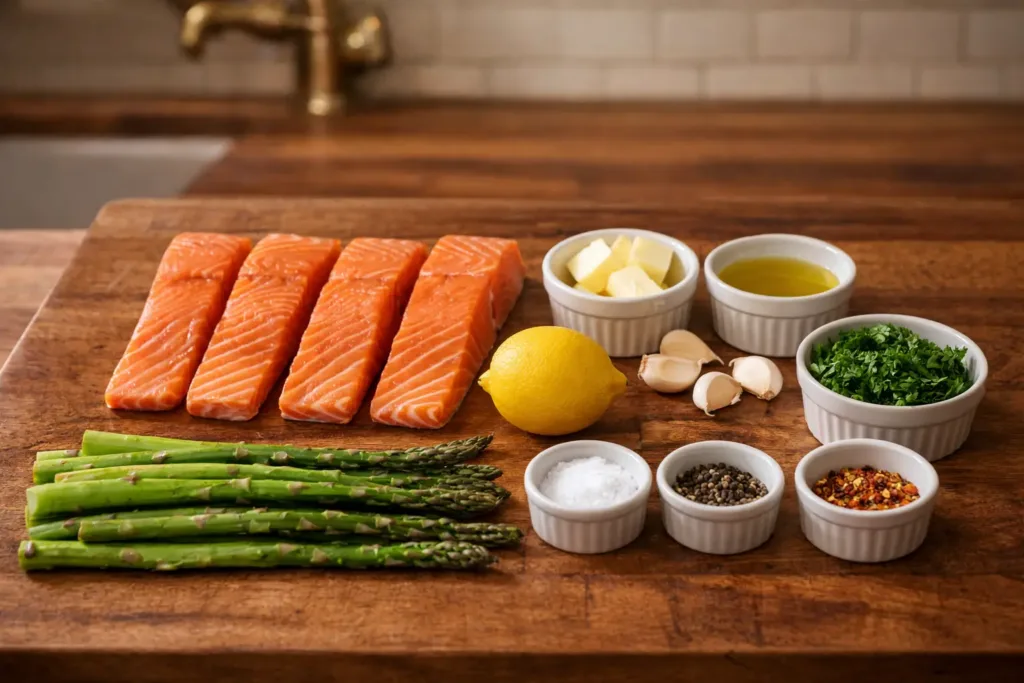
Main
- Salmon fillets (skin-on preferred for moisture, but skinless works)
- Asparagus (medium thickness roasts best)
Flavor base
- Butter
- Olive oil
- Garlic
- Lemon (zest + juice)
- Salt + black pepper
Optional “date-night” upgrades (still fast)
- Red pepper flakes (tiny pinch)
- Fresh parsley
- Cherry tomatoes (add for color in the last 8–10 minutes)
Quick method map (the timing that prevents overcooked fish)
- Heat oven + pan: 425°F. Put your sheet pan in the oven while it heats (hot pan = faster roasting).
- Start asparagus first: toss asparagus with oil, salt, pepper. Roast 6 minutes.
- Add salmon: place salmon on the pan, brush with garlic-butter, return to oven 10–12 minutes.
- Finish fast: lemon juice + parsley after roasting. Rest salmon 2 minutes, then serve.
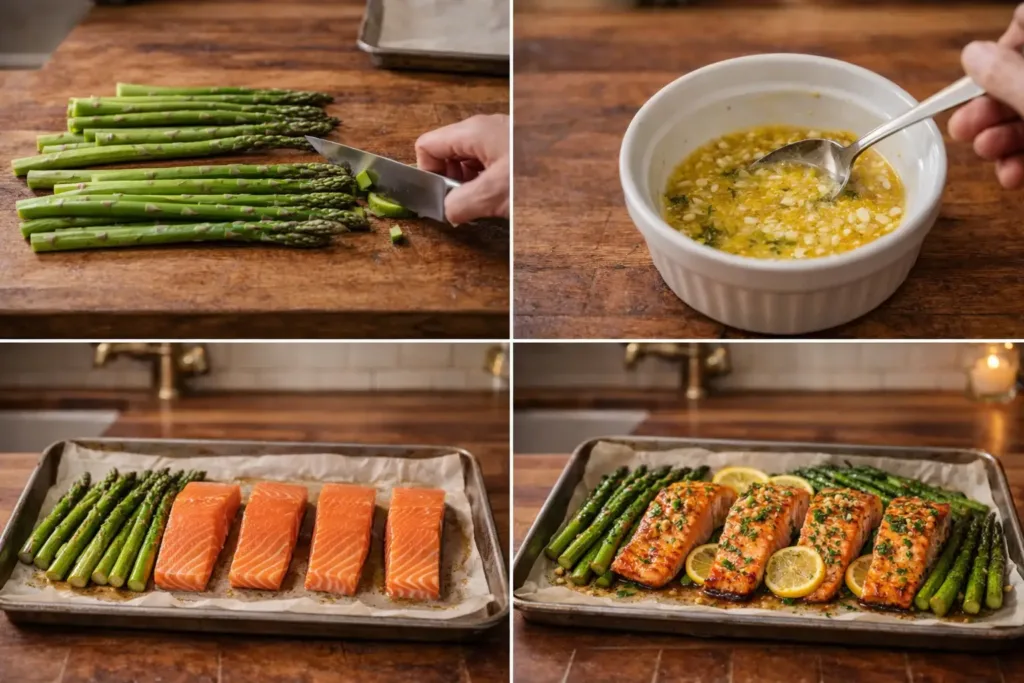
Simply Recipes’ sheet pan salmon and asparagus offers a similar tray-style approach you can compare for doneness cues here.
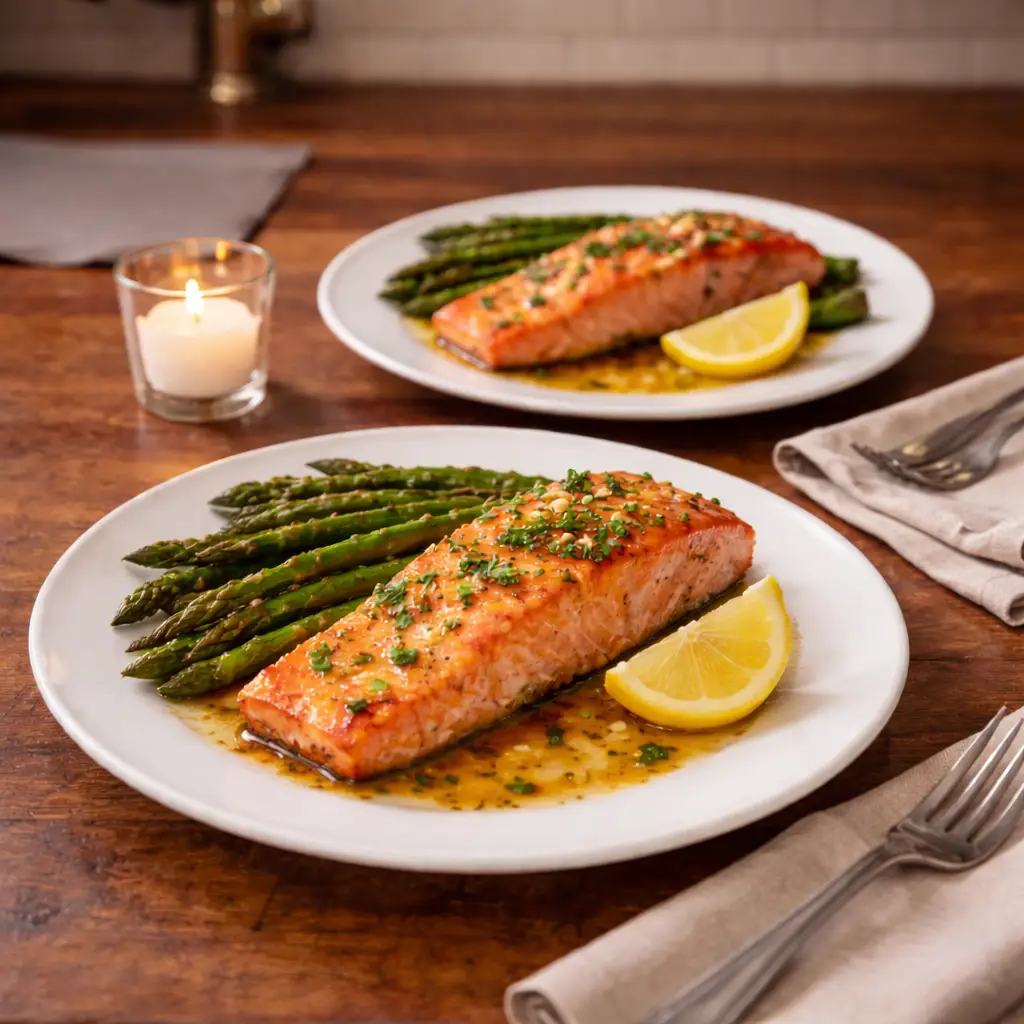
Sheet Pan Garlic Butter Salmon + Asparagus (25 Minutes)
Equipment
- Rimmed sheet pan (half-sheet)
- Parchment paper or foil (optional, for easier cleanup)
- Mixing bowl (for butter mixture)
- Microplane or fine grater (for lemon zest)
- Chef’s knife + cutting board
- Instant-read thermometer (recommended)
- Small spoon or pastry brush (to spread garlic butter)
Ingredients
For the pan
- 1 bunch asparagus about 12–16 spears, ends trimmed
- 1 tbsp olive oil
- 1/2 tsp kosher salt or to taste
- 1/4 tsp black pepper
For the salmon
- 2 salmon fillets 6 oz each, skin-on preferred
- 1 1/2 tbsp butter melted
- 2 tsp olive oil
- 2 garlic cloves finely minced
- 1 tsp lemon zest
- 1 tbsp lemon juice plus wedges for serving
- 1/4 tsp kosher salt
- 1/4 tsp black pepper
- Optional: pinch red pepper flakes
- Optional: 1 tbsp chopped parsley
Instructions
- Preheat + heat the pan: Heat oven to 425°F (220°C). Place a rimmed sheet pan in the oven while it preheats (this helps roasting start fast).
- Prep asparagus: Toss asparagus with 1 tbsp olive oil, 1/2 tsp salt, and pepper. Carefully remove the hot pan, spread asparagus in a single layer, and roast 6 minutes.
- Mix garlic butter: In a small bowl, stir melted butter, 2 tsp olive oil, minced garlic, lemon zest, 1 tbsp lemon juice, 1/4 tsp salt, pepper, and red pepper flakes (if using).
- Add salmon: Push asparagus to the sides. Place salmon fillets in the center, skin-side down if using skin-on. Brush salmon generously with the garlic-butter mixture.
- Roast to doneness: Return pan to oven and roast 10–12 minutes, depending on thickness. Doneness cue: salmon should flake easily at the edges and read 125–130°F in the thickest part for moist, tender fish.
- Rest + finish: Rest salmon on the pan 2 minutes. Sprinkle with parsley (if using) and serve with lemon wedges. Spoon pan juices over salmon and asparagus.
- Notes
- If asparagus is thin: reduce the first roast to 4 minutes so it doesn’t overcook.
- If salmon is thick: plan closer to 12–14 minutes after adding salmon, and rely on temperature instead of guesswork.
- Best “no-dry” safeguard: pull salmon a little early (125–130°F) and let carryover heat finish the center.
- Cleanup tip: parchment prevents butter/garlic from baking onto the tray.
Why this stays easy
- One timing window: asparagus starts first, salmon finishes second, and the tray comes out once.
- No separate sauce: garlic butter melts into pan juices you can spoon right onto the plate.
- No fragile steps: no reducing liquids, no splitting dairy, no wine step to manage.
- Clear doneness cue: thermometer check removes guessing and prevents dry salmon.
Shortcut options
- Use pre-trimmed asparagus: it saves a few minutes and keeps the method identical.
- Melt butter in the microwave: 20–30 seconds is enough; don’t brown it.
- Buy center-cut salmon portions: they cook evenly and make timing predictable.
Loved this sheet-pan style? See more Trend Recipes here.
Storage notes
- Refrigerate: cool leftovers, then store airtight up to 2 days for best texture.
- Reheat: oven at 325°F is the most reliable way to keep salmon tender.
- Do not over-microwave: high power turns salmon firm quickly; use 50% power.
Final time-saver tip
Keep a “sheet-pan kit” in one spot: parchment, a small bowl, a microplane, and a thermometer. When those tools are always within reach, you don’t lose minutes hunting, and you’re far less likely to overcook the salmon while multitasking.
FAQ
Can I make this if I only have frozen salmon?
Yes. Thaw overnight in the fridge for the most even cooking. Pat very dry before roasting so the top roasts instead of steaming.
What’s the best salmon thickness for this timing?
Portions around 1 to 1¼ inches thick are ideal. If yours are thinner, start checking at 8–9 minutes after adding salmon.
How do I keep garlic from tasting harsh?
Minced garlic is fine here because it’s cushioned by butter and cooks quickly. If you’re sensitive to raw garlic, swap in 1/2 tsp garlic powder.