
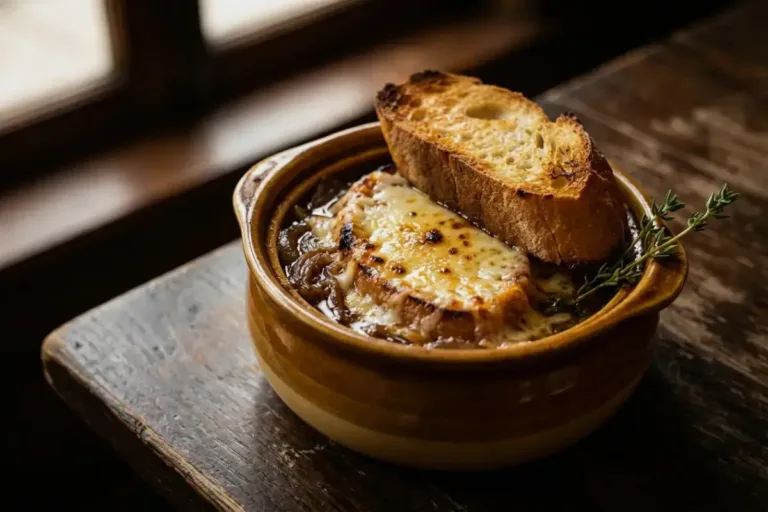
Some dinners feel more like a pause than a meal.
French Onion Soup is one of those.
You stand at the stove, slowly stirring a mountain of onions as they collapse into a deep, jammy tangle.
The kitchen smells buttery and sweet, the pan hisses quietly, and time stretches in a comforting way.
Later, you ladle French Onion Soup into bowls, crown it with toasted bread, and bury everything under a blanket of melted cheese.
It’s simple at heart—onions, broth, bread, cheese.
But when you give French Onion Soup a little patience, it turns into something that feels bigger than its ingredients.
Quick Recipe Snapshot
- Prep time: 20 minutes
- Cook time: 1 hour 30 minutes
- Rest time: 5 minutes
- Servings: 4–6
- Difficulty: Moderate (time and patience, not skill)
- Calories per serving: ~380
- Diet type: Cozy, beef-based soup
Why This French Onion Soup Feels So Deep and Cozy
Why I Made This
I wanted French Onion Soup that tasted like a slow evening in a small bistro, but could still happen in a regular kitchen.
Many versions are either too salty, too thin, or heavy on shortcuts.
This French Onion Soup leans into the ritual of caramelizing onions properly.
No rushing, no high heat that scorches the edges.
Just butter, time, and steady stirring until the onions turn deeply golden and sweet.
I also wanted a recipe that builds comfort without being fussy.
The base is simple, the broth is rich, and the topping is exactly what you expect: toasted baguette and a lid of bubbling, browned cheese.
By the time you slide a spoon through that crust and break into the French Onion Soup beneath, the whole day feels a little softer.
Why It Works
French Onion Soup is all about layering flavor slowly.
First, a generous amount of butter and onions cook down over a mix of low and medium heat.
This long caramelizing step concentrates the natural sugars in the onions and builds the sweet–savory backbone of the soup.
Next, extra broth is used to deglaze the pot.
It lifts all the browned bits from the bottom and adds depth, while a small touch of fresh lemon juice at the end brings a gentle brightness that keeps French Onion Soup from feeling flat.
A little flour thickens the broth just enough so it feels silky, not watery.
Good stock—ideally beef, though chicken works too—joins in with thyme and bay leaves, then simmers until the flavors deepen.
Finally, toasted bread and a generous handful of cheese made with microbial rennet or similar go on top.
The bread soaks up some of the French Onion Soup but still keeps a bit of texture, while the cheese melts and browns into that iconic, stretchy lid.
Every spoonful brings broth, caramelized onions, soft bread, and cheese together in one steady, warming bite.
French Onion Soup Ingredients & Smart Swaps
Ingredients Overview
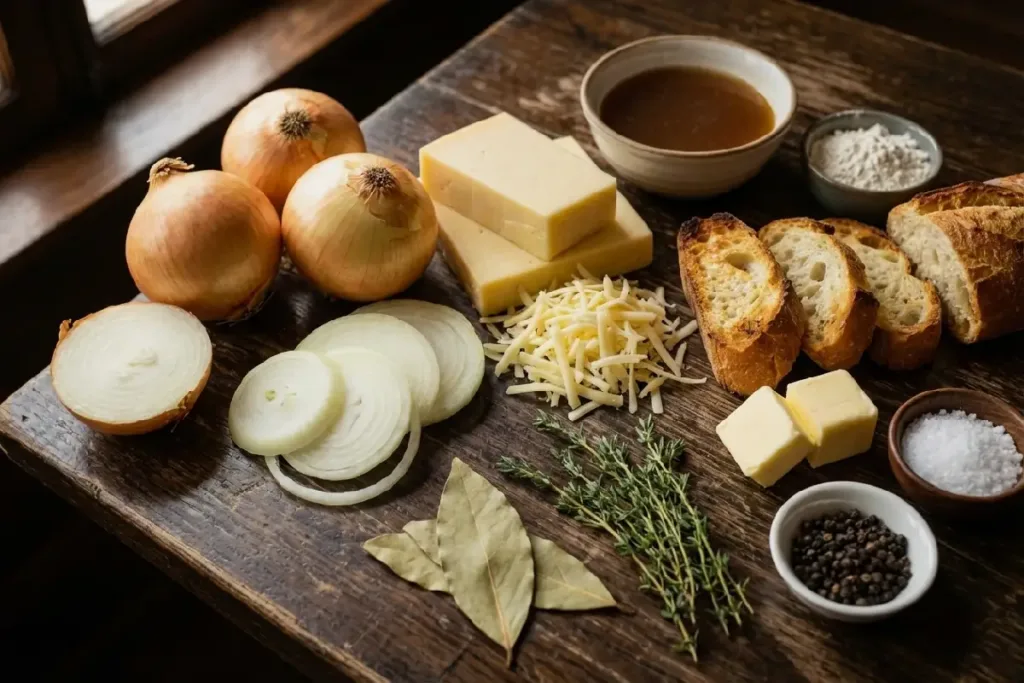
For the Caramelized Onions & Soup
- 7 tablespoons unsalted butter (about 3.5 ounces)
- 2½ pounds yellow or brown onions, peeled, halved, and thinly sliced
- ¾ cup additional beef or chicken broth (for deglazing)
- 2 tablespoons all-purpose flour
- 6 cups good-quality low-sodium beef broth
- or chicken broth if you prefer a lighter French Onion Soup
- 2–3 sprigs fresh thyme (or ½ teaspoon dried thyme)
- 2 bay leaves (dried or fresh)
- 1 teaspoon fresh lemon juice (to brighten at the end; optional)
- Salt and freshly ground black pepper, to taste
For the Cheesy Toast Topping
- 6–8 slices French baguette or other soft white bread
- 3½ ounces (about 1 cup) shredded Gruyère, Swiss, or another good melting cheese made with microbial rennet
- Chopped fresh parsley or thyme, for garnish (optional)
These basics create a French Onion Soup that leans on caramelized onions and quality broth instead of shortcuts, with cheesy toast finishing things exactly the way you’d hope.
Ingredient Swaps or Tips
- Onions:
Yellow or brown onions are classic for French Onion Soup.
You can mix in a little red onion for color, but keep most of them sweet yellow so the flavor stays balanced. - Deglazing liquid:
Instead of wine, this version uses extra broth to loosen browned bits and carry flavor.
A tiny splash of fresh lemon juice at the end adds gentle acidity and keeps French Onion Soup lively. - Broth choice:
Beef broth gives the deepest, most traditional flavor.
If your beef broth isn’t great, use good chicken broth instead—poor stock can make French Onion Soup taste muddy. - Herbs:
Fresh thyme is lovely, but dried thyme works in a pinch.
Don’t overdo it; you want the onions to remain the star. - Cheese:
Gruyère melts beautifully with nutty flavor.
You can use Swiss, provolone, or a mix with a little mozzarella.
Look for cheese made with microbial rennet or clearly labeled vegetarian-friendly rennet if you’re paying attention to how it’s produced. - Bread:
A softer baguette or French bread works best so you can cut through it with a spoon.
Very chewy sourdough can be harder to eat on top of French Onion Soup, though it will still taste good.
Equipment Needed
- Large heavy-bottomed pot or Dutch oven
- Wooden spoon or heatproof spatula
- Sharp knife and cutting board
- Measuring cups and spoons
- Ladle
- Oven-safe soup bowls or ramekins (if broiling cheese directly on top)
- Baking sheet (if making cheesy toast separately)
A wide, heavy pot helps the onions caramelize evenly without burning.
Even if you don’t have individual oven-safe bowls, you can make the cheesy toast separately and float it on each serving of French Onion Soup just before serving.
How to Make French Onion Soup (Step-by-Step)
Step-by-Step Instructions
Step 1: Prep the onions
Peel the onions, halve them from root to tip, then slice thinly from top to bottom.
This shape helps the onions hold their texture as they cook down in the French Onion Soup instead of turning stringy.
Step 2: Melt the butter
Place your heavy pot over medium heat.
Add the butter and let it melt and foam gently, watching so it doesn’t brown.
You want the onions to cook slowly in rich, melted butter.
Step 3: Start softening the onions
Add all the sliced onions to the pot and stir to coat them in butter.
Cook on medium-low heat for about 30 minutes, stirring every few minutes, until the onions are soft and translucent.
Step 4: Deepen the caramelization
Increase the heat to medium or medium-high.
Sprinkle in a pinch of salt and continue cooking for another 20–30 minutes, stirring more often, until the onions are deeply golden, reduced in volume, and smell sweet.
This is the heart of your French Onion Soup.
Step 5: Deglaze with broth
Pour in the additional broth and stir, scraping up any browned bits stuck to the bottom of the pot.
Simmer for about 2 minutes, until the liquid has reduced slightly and the pot looks glossy again.
Step 6: Add flour for gentle body
Sprinkle the flour evenly over the onions.
Cook, stirring constantly, for about 1 minute to remove the raw flour taste.
This will give your French Onion Soup a very light thickness.
Step 7: Add broth and herbs
Slowly pour in the remaining broth while stirring.
Add the thyme and bay leaves.
Bring the French Onion Soup to a gentle simmer, then reduce the heat so it bubbles softly.
Step 8: Simmer for flavor
Cover the pot partially and let the French Onion Soup simmer for about 30 minutes, stirring now and then.
Taste and adjust with salt and pepper.
If you’d like a little brightness, stir in the fresh lemon juice and taste again.
Remove the thyme stems and bay leaves when you’re happy with the flavor.
Step 9: Prepare the bread
While the soup simmers, preheat your broiler.
Slice the baguette and place the pieces on a baking sheet.
Toast on each side until lightly golden.
Step 10: Add cheese to the bread
Top each toasted slice with a generous handful of shredded cheese made with microbial rennet.
Broil again until the cheese is melted and bubbling, with golden brown spots.
Keep a close eye; this happens quickly.
Step 11: Portion the soup
Ladle hot French Onion Soup into warm bowls.
If your bowls are oven-safe, you can place them on a baking sheet now for broiling.
Step 12: Top with cheesy toast
Place one or two cheesy bread slices on top of each bowl of French Onion Soup.
If your bowls are oven-safe, you can quickly broil them again for extra bubbling cheese; if not, serve as is.
Step 13: Garnish and serve
Sprinkle with a little chopped parsley or thyme if you like.
Serve the French Onion Soup immediately while the cheese is still stretchy and the broth is steaming.
Tips for Best Results
- Be patient with the onions.
The deeper they caramelize, the more complex and sweet your French Onion Soup will taste. - Adjust the heat as needed.
If the onions start browning too fast or catching on the bottom, lower the heat; they should deepen in color slowly. - Use the best broth you can.
Since French Onion Soup is mostly onions and broth, quality stock makes a big difference in depth and richness. - Deglaze thoughtfully.
Using extra broth to loosen the browned bits keeps the flavor full while also layering in more savory depth. - Finish with gentle brightness.
A small amount of fresh lemon juice at the end wakes the French Onion Soup up without making it sour. - Toast the bread well.
Lightly crisp bread holds up better in the soup and gives you that perfect soft-but-not-soggy bite. - Serve right away.
The cheese and bread are at their best in the first few minutes, when the top is molten and the French Onion Soup underneath is hot and fragrant.
Serving & Storage for French Onion Soup
Serving Suggestions
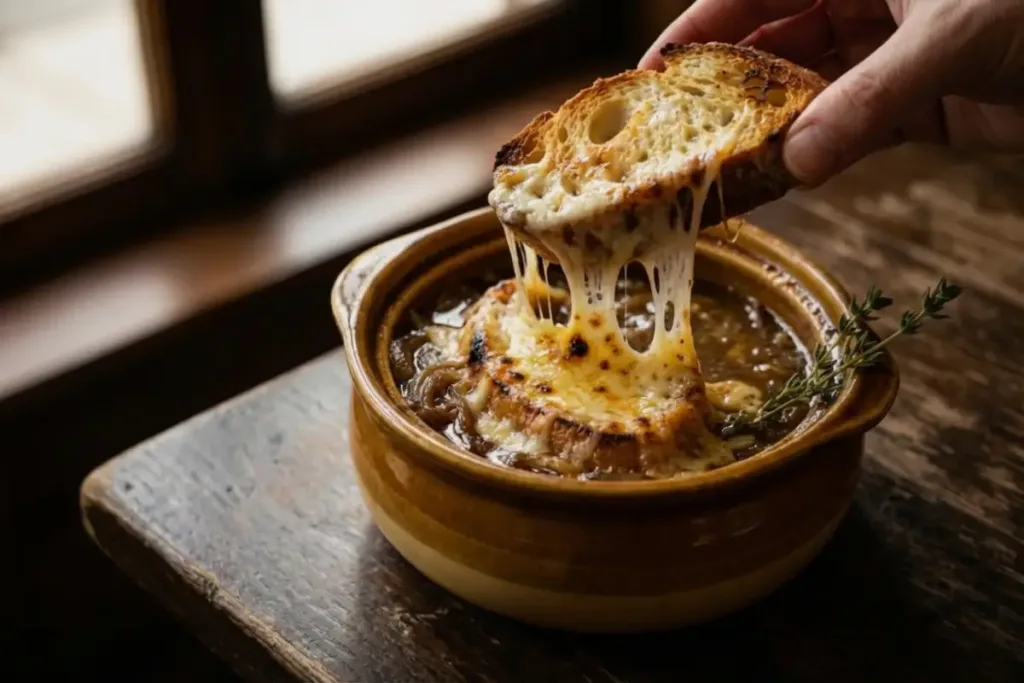
Serve French Onion Soup very hot, with the cheesy toast crowning each bowl.
The fun is in breaking through the cheese and bread with a spoon and pulling up a mix of onions and broth underneath.
A simple green salad with a sharp vinaigrette pairs beautifully, cutting through the richness.
You can also add a plate of sliced apples, grapes, or pickles to give fresh, bright bites between spoonfuls of French Onion Soup.
If you’re planning a cozy dinner lineup for the week, you might enjoy French Onion Soup on one night and then lean on a hearty chicken and rice casserole another evening, trading bowls of deep broth for creamy baked comfort while still staying in the “warm, filling” lane.
Storage & Leftovers
Let leftover French Onion Soup cool to room temperature, then transfer it to airtight containers.
Store in the fridge for up to 3–4 days.
Keep any leftover cheesy bread separate so it doesn’t sit in the soup.
To reheat, warm French Onion Soup gently in a pot over medium-low heat until steaming.
Toast fresh bread, top with cheese made with microbial rennet, and broil just before serving for that freshly melted finish.
You can also freeze the soup (without bread and cheese) for up to 2–3 months.
Cool completely, freeze in portions, then thaw overnight in the fridge.
Reheat on the stove and finish with new cheese toasts on top.
FAQ — French Onion Soup
Why does French Onion Soup take so long to cook?
French Onion Soup needs time for the onions to caramelize deeply.
Rushing this step leaves them pale and sharp instead of sweet and rich, and the whole soup tastes less developed.
Can I make French Onion Soup without wine?
Yes.
This version uses extra broth to deglaze the pot and a touch of fresh lemon juice at the end to brighten the flavor, so you still get a layered, complex French Onion Soup without wine.
What’s the best cheese for French Onion Soup?
Gruyère is classic for French Onion Soup because it melts smoothly and tastes nutty and rich.
Swiss, provolone, or a blend with a little mozzarella also work well.
Choosing cheese made with microbial rennet or clearly labeled vegetarian-friendly rennet is a thoughtful option.
Can I make French Onion Soup ahead of time?
Absolutely.
French Onion Soup actually improves after a day in the fridge as the flavors meld.
Just reheat gently and top with freshly toasted, cheesy bread right before serving.
Nutrition Facts — Per Serving (Approx., 1 of 6)
| Nutrient | Amount |
|---|---|
| Calories | ~386 |
| Carbohydrates | ~34 g |
| Protein | ~16 g |
| Fat | ~21 g |
| Saturated Fat | ~12 g |
| Fiber | ~4 g |
| Sugar | ~7 g |
| Sodium | ~1100 mg |
Conclusion
French Onion Soup asks for patience, but it pays you back in quiet ways.
You stand over the pot, stirring slowly, and watch a mountain of sharp onions turn into something silky and golden.
Later, when you carry those cheese-topped bowls to the table and hear the first clink of spoon against crock, the effort feels small compared to the comfort it brings.
This French Onion Soup is simple, steady food: a little sweet, a little salty, and endlessly soothing on a cold or crowded day.